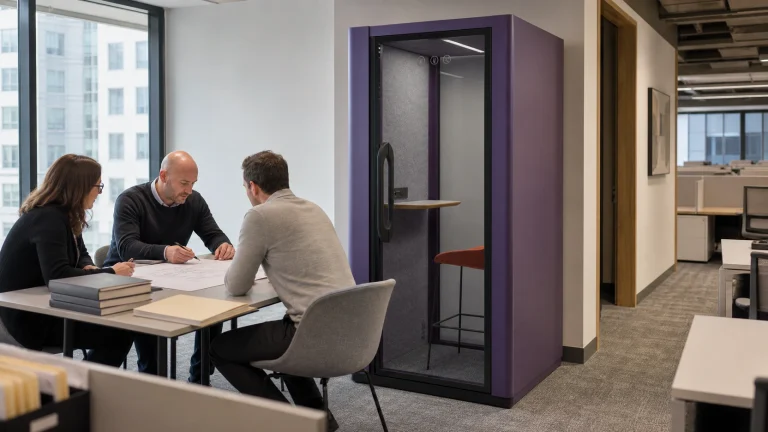
When an office runs short of private meeting space, the immediate question is often “pod or new room?” The more useful question is: what does this space need to do now, and how likely is that need to change?
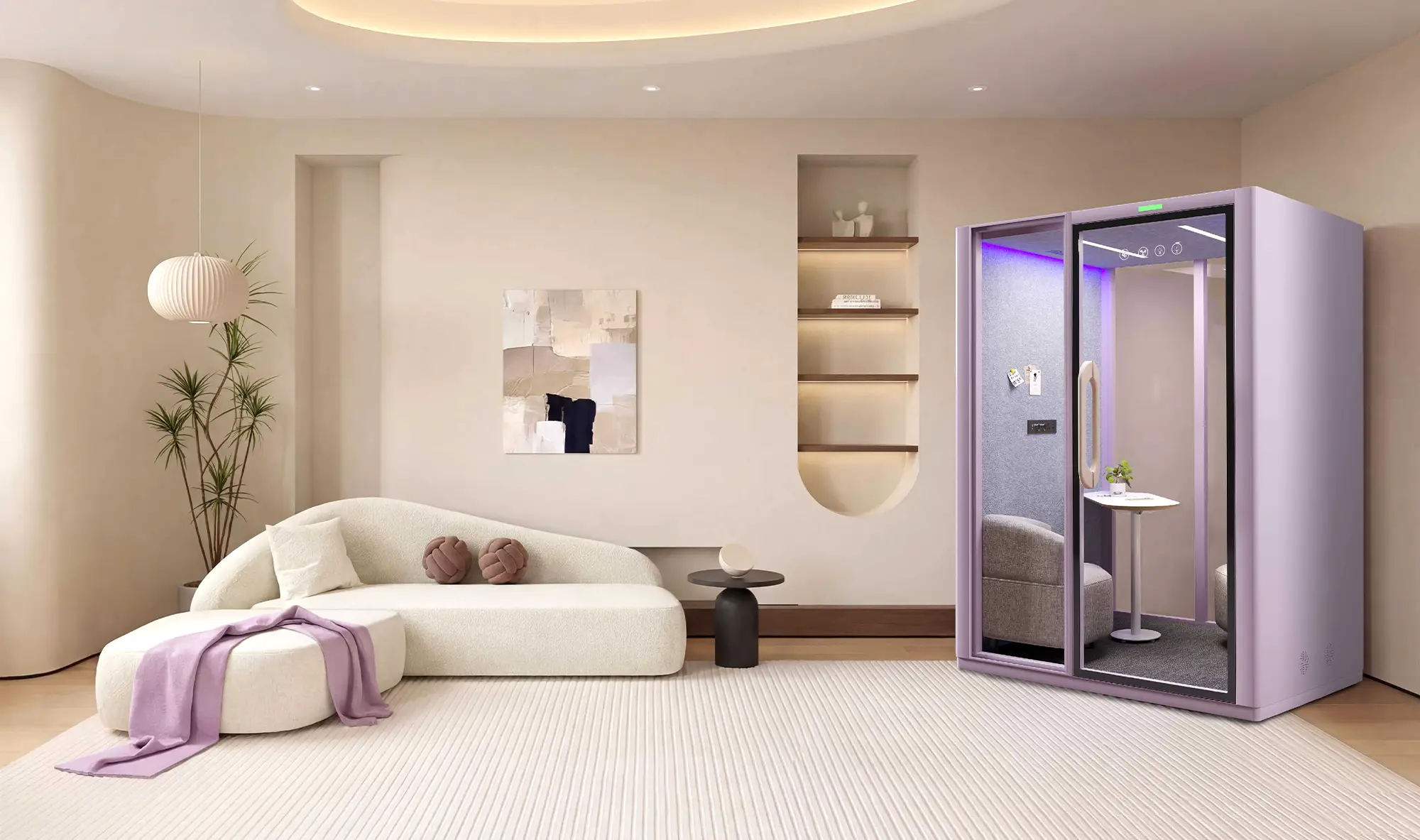
Both approaches can be appropriate. A permanent room may be right when the layout, services and long-term occupancy are settled. A modular pod may be worth considering when the project needs a self-contained setting for calls, focus or meetings within an active workplace. The decision should come from the brief, not a default preference.
Start with the work pattern
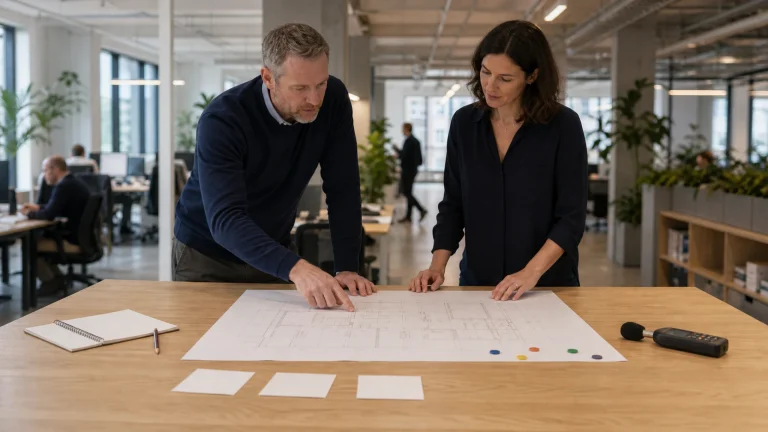
Map the meetings that are not working today. Are people looking for a private place for short calls? Do teams need more two-person rooms? Are larger rooms booked for conversations that could happen in a smaller setting? This audit often reveals that the issue is not a single shortage of “meeting rooms,” but a mismatch between room sizes and the work being done.
Compare the full project scope
It is easy to compare a product price with a construction estimate and stop there. A more useful comparison includes the space itself, furniture, power and data, lighting, ventilation, fire strategy, access, delivery, installation, approvals, programme, disruption and future change. The responsible project team should confirm local code and building-management requirements for either approach.
For a pod, ask what is supplied as standard and what remains a project responsibility. For a built room, establish which services, finishes and acoustic treatments are included. The aim is not to force the options into the same shape; it is to understand the complete decision before commitments are made.
Consider privacy as a performance requirement
If the room will host confidential conversations, hybrid meetings or concentrated work, describe the privacy requirement in practical terms. Is the priority reduced speech distraction? Greater visual discretion? A quiet video-call setting? The answer affects the product or construction detail you need.
Ask for evidence that applies to the exact solution. A generic acoustic adjective does not explain performance. For an office pod, request the model-specific acoustic information and note the tested configuration. For a constructed room, review the relevant wall, door, glazing, ceiling and service details with the design team.
Plan for change without assuming it is free
Modular products can support a workplace that needs to adapt, but they still need a clear installation and relocation plan. Consider how the item reaches the floor, where it can sit, whether it can be moved later and what services or finishes are affected. Permanent rooms can offer deeper integration with the building, but future alteration can require a different level of work.
Neither option is automatically more flexible, quieter or more economical. The winner changes with the site, programme, building and use pattern.
Make the decision with one short brief
For each proposed space, document the activity, group size, privacy outcome, duration of use, equipment, location, project constraints and foreseeable changes over the next few years. Then ask the designer, facilities lead and supplier to respond to the same brief. It turns a product comparison into a planning decision and gives everyone a more reliable basis for the next step.